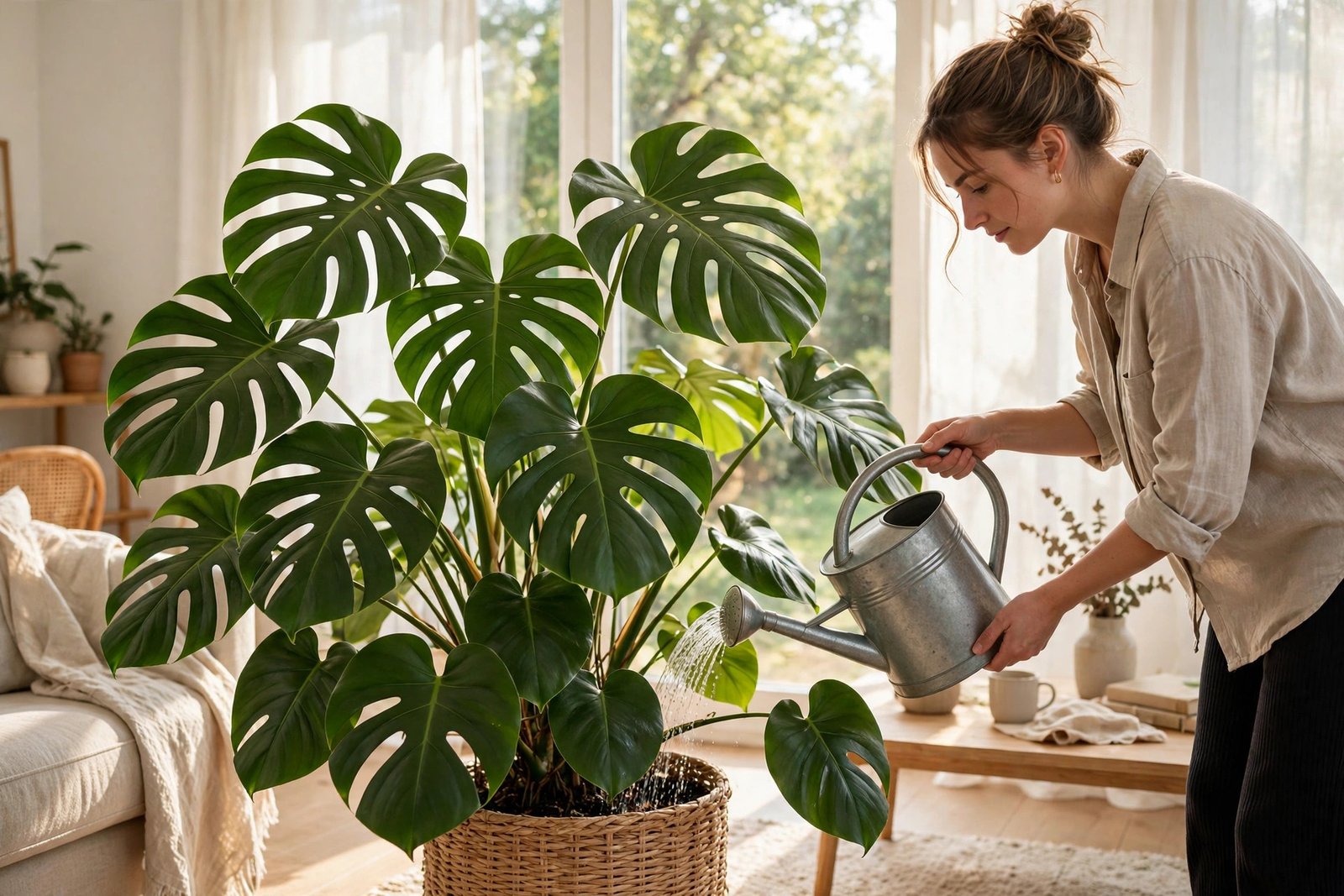
TL;DR
- Light: bright, indirect light. An east-facing window, or a few feet back from a bright south or west window, is ideal. Harsh afternoon sun scorches leaves; too little light means small, solid leaves with no splits.
- Water: only when the top 1–2 inches of soil feel dry. Water thoroughly until it drains, then empty the saucer. Overwatering is the fastest way to kill a monstera.
- Soil: a chunky, well-draining aroid mix — regular potting soil plus orchid bark and perlite — so roots get air as well as moisture.
- Support: mature plants need a moss pole, trellis, or sturdy stake. Support helps the plant grow up instead of sprawling, and bigger leaves follow — but light and maturity, not the pole alone, are what create the splits.
- Toxicity: monstera is toxic to cats and dogs. Keep it out of reach, and call your vet immediately if a pet chews any part of it.
I bought my first monstera as a small plant in a six-inch pot, mostly because of a photo. Three years later it is over six feet tall, leaning on a moss pole by the window. The secret is consistency: get light, water, soil, and support right, and the plant mostly takes care of itself.
Monstera care at a glance
| What it needs | The short version |
|---|---|
| Botanical name | Monstera deliciosa (Swiss cheese plant) |
| Light | Bright, indirect; 1–3 hours gentle morning sun is fine |
| Water | When top 1–2 inches of soil are dry |
| Soil | Chunky, well-draining aroid mix |
| Humidity | Average household air is fine; 50–60% is ideal |
| Temperature | 65–85°F (18–29°C), no cold drafts |
| Feeding | Balanced liquid fertilizer at half strength, every 2–4 weeks in spring and summer |
| Support | Moss pole, trellis, or sturdy stake for mature plants |
| Toxicity | Toxic to cats and dogs |
Light: the thing that decides everything
In nature monstera climbs trees toward brighter light, and that instinct never leaves it. Indoors, bright indirect light is the goal — near an east-facing window, or a few feet back from a south or west window with a sheer curtain.
Too little light, and growth slows, stems stretch, and new leaves stay small and solid instead of developing the splits — the fenestrations — that make a monstera look like a monstera. Too much direct sun, especially harsh afternoon sun, scorches leaves into brown, crispy patches that do not heal.
Here is the honest part most guides skip: a moss pole does not create fenestrations by itself. Splits come from a mature plant getting enough light over time. Young monsteras naturally produce solid, heart-shaped leaves, and that is normal, not a failure. Give the plant good light, let it mature, and the splits come. If your monstera is growing but never splitting, light is almost always the first thing to fix, not the support.
Rotate the plant a quarter turn every couple of weeks for even growth.
Water: the finger test, every time
Water your monstera when the top 1–2 inches of soil feel dry to the touch. Push your finger in up to the second knuckle. If it feels damp, wait. If it feels dry, water.
When you water, water thoroughly — slowly, all around the pot, until it drains freely. Then empty the saucer: a monstera sitting in drained water is on its way to root rot, the one monstera problem that is genuinely hard to reverse. In spring and summer, that usually works out to about once a week in a warm, bright room. In fall and winter, growth slows and watering may stretch to every 10–14 days. The calendar is a guess; the finger test is the answer.
If you want the full watering discipline spelled out — including the soak-and-drain routine and the seasonal rhythm — the guide to How to Water Pothos Without Overwatering It covers the same principles, and they transfer directly to monstera.
Soil: chunky, not dense
Regular potting soil straight from the bag holds too much water for a monstera. It stays wet, the roots get no air, and rot follows. What you want is a chunky aroid mix that drains freely but still holds some moisture. A simple recipe that works:
- 2 parts indoor potting soil
- 1 part orchid bark
- 1 part perlite or pumice
Mix it, pot the plant, and water it in. If water takes forever to drain, or the surface stays wet for days, the mix is too dense — add more bark and perlite next time you repot. Repotting itself is a every-1-to-2-years job, into a pot only one or two inches wider, and spring is the best time for it. Do not repot a stressed plant in winter unless the roots are actively rotting.
Support: giving a climber something to climb
In the wild, monstera climbs trees using aerial roots — those brown, root-like growths that stick out from the stem. Indoors, without support, a mature monstera sprawls sideways, takes over a room, and grows smaller leaves than it otherwise would. A moss pole, coir pole, trellis, or even a sturdy stake changes that.
Set the pole in when you repot, close to the main stem, and gently tie the stem to it with soft plant ties or twine — not wire, which cuts into the stem. As aerial roots grow, you can guide them toward the pole; a moss pole kept slightly damp gives them something to grip. Do not force a thick, stiff stem into a new position all at once. Tie it loosely, let it adjust for a week, then tighten a little more.
Feeding, humidity, and temperature
Feed during spring and summer only, with a balanced liquid houseplant fertilizer at half the strength on the label, every 2–4 weeks. Skip feeding in fall and winter. A plant that is not growing does not need food.
Humidity is the least fussy part of monstera care: average household air is fine, and grouping plants or running a humidifier in a very dry winter room helps. Misting raises humidity for minutes, not hours, so do not rely on it.
Temperature is simple: normal indoor temperatures, 65–85°F, and keep the plant away from cold drafts, drafty windows in winter, and hot air blowing directly from heating vents. Sudden temperature swings stress the plant and can yellow leaves fast.
Pruning and cleaning
Prune if the plant gets leggy or sprawls beyond its space. Cut just above a node — the bump on the stem where a leaf or aerial root grows — using clean, sharp scissors, and the plant will usually branch from that point. Those cuttings, by the way, root in water the same way pothos cuttings do; the node rule is identical, and How to Propagate Pothos in Water (Step by Step, With Roots Timeline) explains it in full.
Wipe leaves with a damp cloth every few weeks — dust blocks light, and you will spot pests early while you are at it.
Pet safety: read this before you buy
Monstera deliciosa is toxic to cats and dogs. The ASPCA lists it as toxic to both, and the toxic principle is insoluble calcium oxalate crystals — microscopic needle bundles in the leaves, stems, and stalks. When a pet chews the plant, those crystals irritate the mouth, tongue, and throat, causing oral pain, excessive drooling, pawing at the face, vomiting, and difficulty swallowing.
There is no nibble-safe part of the plant, and a high shelf is not a guarantee — cats climb, and leaves fall. If a pet eats any part of a monstera, remove plant material from its mouth if you safely can, and call your veterinarian immediately. Do not wait to see whether symptoms pass on their own, and do not try home remedies first. If your pet is a dedicated plant chewer, a monstera may simply be the wrong plant for your home.
Troubleshooting
Yellow leaves. Usually overwatering — check the finger test and drainage first. If your plant is yellowing and you want the full diagnosis routine, Why Are My Plant Leaves Turning Yellow? (Diagnose It in 2 Minutes) walks through every cause in order.
Brown, crispy leaf tips or edges. Often underwatering, low humidity, or too much direct sun. Check water first, then light, then whether the plant sits in a draft or near a heater.
No splits on new leaves. Almost always light or youth. A young plant with solid leaves is normal. A mature plant in a dark corner needs a brighter spot, and patience — splits appear on new growth after conditions improve, not on old leaves.
Leggy growth with long gaps between leaves. Not enough light, full stop. Move it brighter and prune back the leggiest stems in spring.
Common mistakes
- Watering on a schedule instead of checking the soil. Your home, your pot, and your season all change the answer.
- Putting a new monstera straight into harsh afternoon sun because “tropical plants love sun.” They love bright light, not scorching.
- Repotting into a much bigger pot “to give it room.” A pot that is too big holds too much wet soil, and wet soil is the enemy.
- Expecting a moss pole to create splits overnight. Light and maturity do that; the pole just helps the plant grow up.
Frequently asked questions
How often should I water my monstera?
When the top 1–2 inches of soil are dry — typically about once a week in spring and summer, less often in winter. Always check with your finger — light, pot size, and season all change how fast soil dries.
Why is my monstera not getting split leaves?
Usually because the plant is young or the light is too low. Young monsteras naturally grow solid leaves. If the plant is mature and still not splitting, move it to brighter indirect light and give it a few months — new leaves, not old ones, will show the change.
Do monsteras need a moss pole?
Not when they are small, but mature plants benefit greatly. A pole keeps the plant growing upward instead of sprawling, supports heavier stems, and encourages larger leaves. A trellis or sturdy stake works too if a moss pole is not your style.
Can I keep a monstera if I have a cat or dog?
Only with real caution. Monstera is toxic to cats and dogs, and chewing causes mouth pain, drooling, and vomiting. Keep it somewhere genuinely out of reach, watch for fallen leaves, and call your vet immediately if your pet eats any part. If your pet chews plants regularly, choose a different plant.
When should I repot my monstera?
Every 1–2 years, when roots circle the pot or grow from the drainage holes. Move up only one or two inches, use a chunky aroid mix, and water it in. Do not repot in winter unless roots are rotting.