TL;DR
- There is one rule, and it replaces every schedule: water only when the top 1–2 inches of soil feel dry. Push your finger in to the second knuckle. Damp means wait.
- When you water, soak thoroughly until water drains from the bottom, then empty the saucer after 15–30 minutes. Never let pothos sit in standing water.
- In most homes that works out to about every 1–2 weeks, but light, pot size, and season change it — bright rooms dry faster, winter slows everything down.
- Yellow, soft leaves plus constantly damp soil means overwatering. Drooping, dull leaves plus dry soil means thirst. Learn the difference and you will stop killing pothos with kindness.
- Pothos is toxic to cats and dogs. Keep it out of reach, and call your vet immediately if a pet chews it.
Pothos has a reputation as the plant you cannot kill, and I believed it right up until I killed one. It was my second houseplant ever, trailing beautifully from a bookshelf, and I watered it every Sunday because Sunday was watering day. The soil never dried, the roots rotted quietly underground, and by the time the leaves went yellow it was too late. Pothos is forgiving of almost everything except constantly wet feet. Learn the watering, and the rest of pothos care is easy.
The only rule that matters
Forget the calendar. The rule is: check the soil, then decide.
Push your finger into the soil up to the second knuckle, about two inches deep. The surface dries fast and tells you nothing — I have watered plants whose surface looked dry while the root ball was still soaking. Two inches down is where it counts.
- Feels dry at two inches: water.
- Feels damp or cool-moist: wait, and check again in two or three days.
- Feels wet, or the pot feels heavy days after watering: you have a drainage problem, not a schedule problem.
A wooden skewer or chopstick works the same way if you dislike getting soil under your nails. Push it deep, pull it out, and look: damp soil sticks to it, dry soil does not. A moisture meter is fine too, but it is a convenience, not a requirement. Your finger is free and it does not need batteries.
How to water, step by step
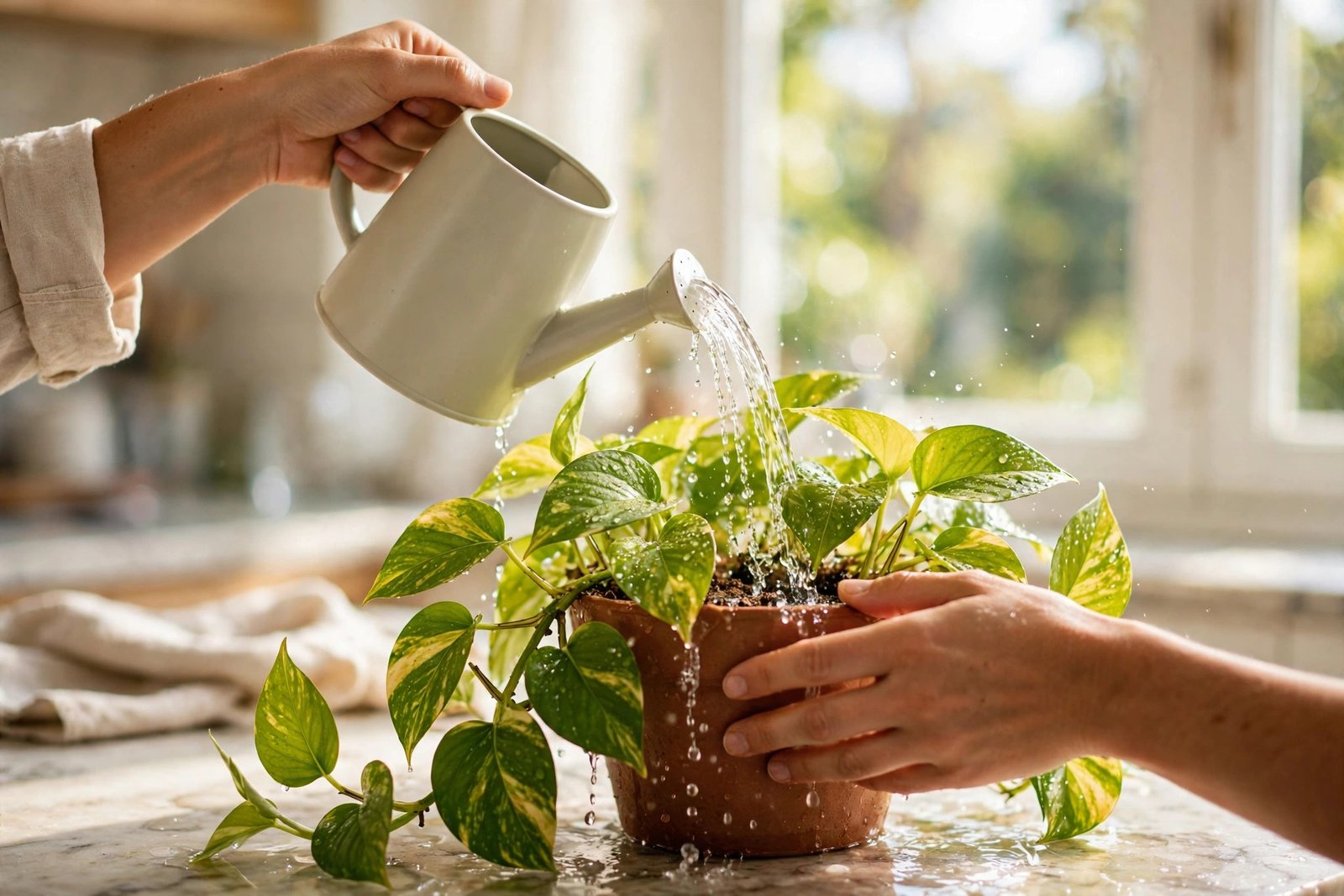
When the finger test says dry, do it properly. A timid sip that wets only the top inch trains roots to stay shallow and leaves the lower roots dry.
- Water slowly and evenly across the whole soil surface, not just in one spot.
- Keep going until water runs freely from the drainage holes in the bottom.
- Wait 15–30 minutes, then empty the saucer or cache pot completely. This is the step people skip, and it is the step that matters most — a pothos standing in drained water is a pothos with wet feet all week.
- Do not water again until the top 1–2 inches are dry once more.
Use room-temperature water. Ice-cold water straight from a cold tap can shock roots, especially in winter. Tap water is fine for most pothos, but if your water is very hard or heavily chlorinated, letting it sit uncovered overnight lets some chlorine dissipate and brings it to room temperature at the same time.
How often, honestly, by season
If you want a starting point — not a rule, a starting point — here is what most homes see:
| Season | Typical gap between waterings | Why |
|---|---|---|
| Spring | Every 7–10 days | Active growth, brighter days |
| Summer | Every 5–9 days | Heat and light dry soil faster |
| Fall | Every 10–14 days | Growth slows, days shorten |
| Winter | Every 2–3 weeks | Low light, cool rooms, near-dormancy |
Your home will differ. A pothos in bright indirect light in a terracotta pot in summer might need water weekly. The same plant in a plastic pot in a dim winter room might go three weeks. Pot material matters more than people think: terracotta breathes and dries faster, plastic and glazed ceramic hold moisture longer, and smaller pots dry faster than big ones. Soil matters too — a dense, peaty mix stays wet far longer than a mix with perlite or orchid bark loosened through it. That is why the finger test beats every schedule anyone could print.
Thirsty or overwatered? Learn the difference
These two problems look alike at first glance — both yellow leaves — and treating one like the other makes things worse. Here is how to tell them apart:
Thirsty pothos: leaves droop and look dull or slightly wrinkled, but stay green. The soil is dry, the pot feels light, and the plant perks up within hours of a good soak. Lower leaves may yellow, but they stay firm, not mushy.
Overwatered pothos: leaves go yellow and soft, sometimes with brown, mushy spots. The soil is damp days after watering, the pot feels heavy, and the plant does not perk up after watering — because water was never the problem. In bad cases the stems feel soft at the base and the soil smells sour. That is root rot, and it needs the rescue section below.
When you are unsure, check the soil before you do anything else. Damp soil means do not water, however yellow the leaves look. That single habit would save more pothos than any product on the market.
Top watering vs. bottom watering
Top watering — pouring over the soil until it drains — is the standard method and it works perfectly well if you empty the saucer. Bottom watering is the alternative: set the pot in a tray of water for 20–30 minutes so the soil absorbs moisture upward, then let it drain fully. Bottom watering encourages deeper roots and keeps the leaves dry, which some growers prefer.
Either method is fine. What is not fine is leaving the plant sitting in water for hours after either method. Drainage is not optional, whichever direction the water travels.
Rescue: you already overwatered it
Do not panic, and do not repot immediately — repotting is stress on top of stress. Try this first:
- Stop watering completely and move the plant somewhere with bright indirect light and good airflow.
- Empty the saucer, and if the pot has no drainage holes, that is your first real problem — move the plant to a pot that does, keeping the same soil if the roots still look firm and pale.
- Let the soil dry out thoroughly, right through, before watering again. This can take a week or more. That is fine.
- If stems are mushy, leaves are dropping fast, or the soil smells sour, take the plant out and inspect the roots. Trim any black, mushy, slimy roots with clean scissors, keeping only firm, pale roots. Repot into fresh, well-draining mix, water lightly once, and then leave it alone to recover.
Recovery is judged by new growth, not old leaves. Leaves that went fully yellow will not turn green again. If new leaves come in healthy and firm, the plant forgave you. For the full yellow-leaf diagnosis — because yellowing has other causes besides water — see Why Are My Plant Leaves Turning Yellow? (Diagnose It in 2 Minutes).
What affects how fast pothos dries out
- Light: brighter rooms mean faster growth and faster drying. A pothos in low light can go weeks between waterings.
- Pot size: a small pot in a big plant’s hands dries fast; an oversized pot holds wet soil around a small root system for far too long. Pot up only one or two inches at a time.
- Pot material: terracotta dries fastest, plastic and glazed ceramic slowest.
- Soil: dense, compacted mix stays wet. A mix loosened with perlite drains and dries on a saner schedule.
- Season: winter is the danger season for overwatering, because the plant barely drinks while the owner keeps watering on a summer schedule.
A quick note on pets
Pothos is toxic to cats and dogs — the ASPCA lists golden pothos as toxic to both. All parts contain insoluble calcium oxalate crystals, and chewing causes mouth irritation, drooling, vomiting, and difficulty swallowing. Keep trailing vines well out of reach (cats climb, and vines fall), and call your vet immediately if a pet eats any part. Pothos is a wonderful beginner plant, but it is not a pet-safe one.
Common mistakes
- Watering every Sunday, or every day, without checking the soil. Schedules kill more pothos than neglect does.
- Leaving water in the saucer “so the plant can drink later.” It does not drink later. It rots.
- Using a pot with no drainage holes because it looks better. Use a nursery pot with holes inside the pretty pot, and empty the pretty pot after watering.
- Misting instead of watering. Misting wets leaves, not roots, and does nothing for a thirsty plant.
- Feeding a struggling, overwatered plant. Food is not medicine, and fertilizer on damaged roots burns them further.
- Judging recovery by old yellow leaves. Watch the new growth.
Frequently asked questions
How often should I water my pothos?
Only when the top 1–2 inches of soil are dry — typically every 1–2 weeks in most homes, more often in bright summer rooms, far less often in winter. Check with your finger every time. The schedule follows the soil, not the calendar.
Can I water pothos from the bottom?
Yes. Set the pot in a tray of water for 20–30 minutes, then let it drain completely and empty any standing water. Bottom watering encourages deep roots. Just do not leave the plant sitting in water for hours afterward.
Why are my pothos leaves turning yellow?
Most often overwatering — soft yellow leaves plus damp soil is the classic sign. But yellowing has other causes too, from light to pests. The diagnosis guide walks through them in order: Why Are My Plant Leaves Turning Yellow? (Diagnose It in 2 Minutes).
Should I mist my pothos?
Only if you enjoy it. Misting raises humidity for a few minutes and does nothing for watering. Pothos tolerates average household humidity perfectly well, so misting is optional, never a substitute for watering the soil.
My pothos has root rot. Can it be saved?
Often, yes, if some roots are still firm and pale. Trim away all black, mushy roots with clean scissors, repot into fresh well-draining mix, water once lightly, and then leave it alone. Healthy new growth in the following weeks means it worked. If the stems are mushy all the way up, take healthy cuttings instead — see How to Propagate Pothos in Water (Step by Step, With Roots Timeline) — and start fresh from those.