TL;DR: Low light does not mean no light — it means a north-facing window, a spot several feet from a brighter window, or a room shaded by trees or buildings. The plants that genuinely thrive there are snake plant, ZZ plant, pothos, heartleaf philodendron, cast iron plant, Chinese evergreen, and parlor palm. Give them the brightest spot you can, water less than you would in a bright room, and skip the plants that merely tolerate darkness. Below is who to buy, who to avoid, and how to keep them alive.
WHAT “LOW LIGHT” REALLY MEANS
Plant labels throw the phrase around, but it helps to know what it actually looks like in a home. Low light usually means a north-facing window, a corner several feet from the nearest window, or a room where buildings or trees block direct sun. A commonly used baseline is around 100 foot-candles — bright enough to read comfortably, dim compared to a sunny windowsill. Distance matters as much as direction. Even tough low-light plants usually do not get enough light more than about 10 feet from an average window. So in a dark room, the closest spot to the glass is the one to use — not the far corner by the sofa. Test your spot with the shadow test from our beginner houseplant care routine: hold your hand a foot above where the plant would sit at midday. A soft, fuzzy shadow means low to medium light. Almost no shadow means the spot may be too dark even for this list, and a grow light is a better answer than a tougher plant. No houseplant lives indefinitely in true darkness, and standard room lighting is made for people, not photosynthesis.
THE 7 BEST LOW-LIGHT PLANTS
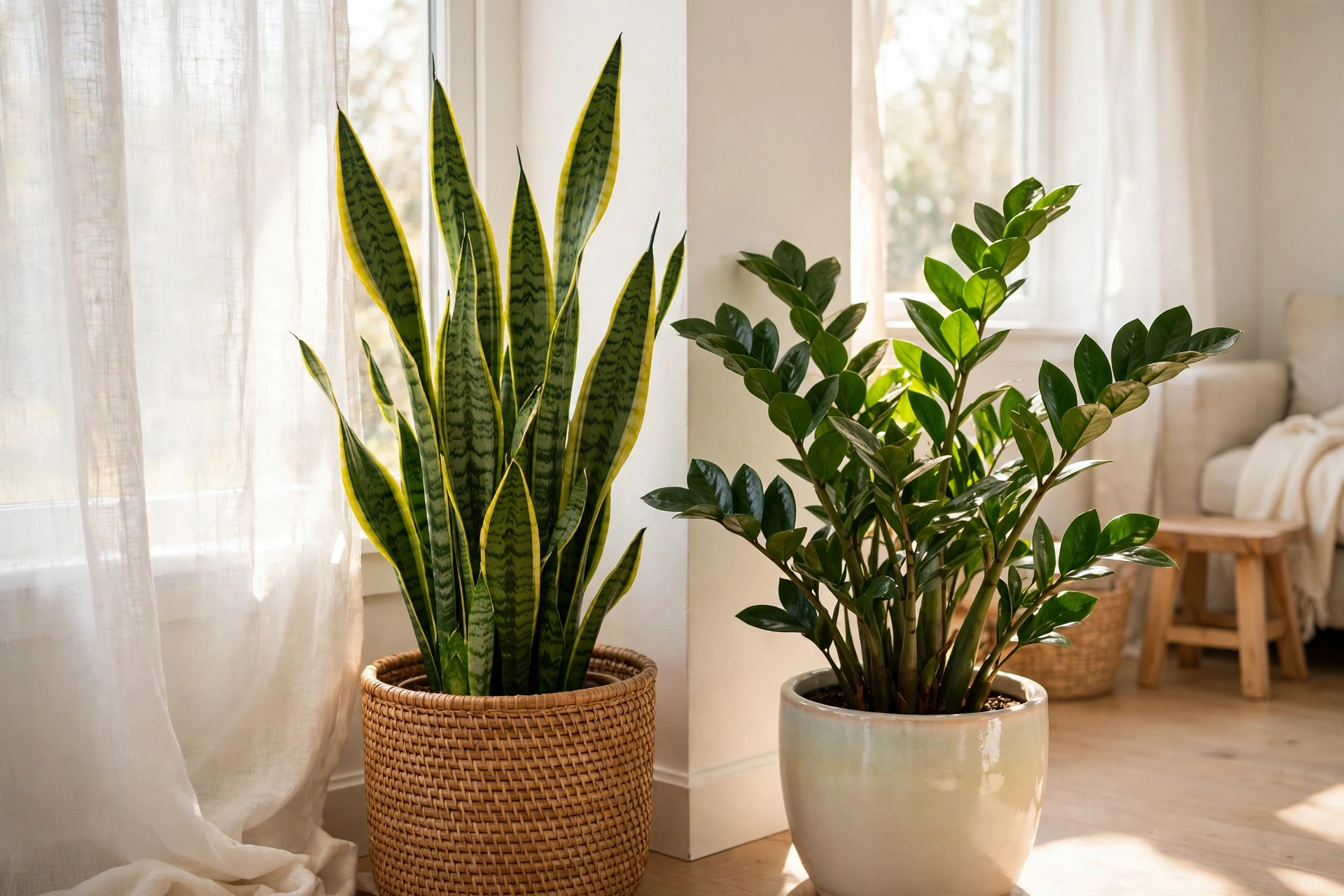
1. Snake plant (Dracaena trifasciata). The safest dark-room pick. Upright, architectural leaves, nearly impossible to kill, and it stores water in its thick leaves, so it forgives missed waterings for weeks. Water every two to three weeks, only when the soil is dry. Note: toxic to cats and dogs, so keep it out of pets’ reach. 2. ZZ plant (Zamioculcas zamiifolia). Glossy, waxy leaves on upright stems, famously happy in offices and windowless corners. Its underground rhizomes store water, so it survives neglect and low light together. Water roughly every three weeks. Toxic to cats and dogs if chewed. 3. Pothos (Epipremnum aureum). The trailing classic. It grows in low light, though more slowly, and tells you when it is thirsty by drooping. In very dim spots, pick a darker green variety — heavily variegated types can lose their cream markings when light is too low. Our pothos watering guide covers its routine in detail. Toxic to cats and dogs. 4. Heartleaf philodendron. Heart-shaped leaves on trailing vines, easygoing and happy a few feet from a window. It may stretch and get leggy in deep shade, so prune long stems to keep it full. Toxic to cats and dogs. 5. Cast iron plant (Aspidistra elatior). The name is the review: dark green leaves that survive deep shade, neglect, and irregular watering. It grows slowly, which is a feature in a dim room — less growth means less demand. Non-toxic to cats and dogs, a rare safe pick on this list. 6. Chinese evergreen (Aglaonema). Lush, patterned leaves bred for life under a forest canopy. Darker green varieties handle the dimmest spots best, since their extra chlorophyll captures what little light there is; pale, variegated types need a bit more. Toxic to cats and dogs. 7. Parlor palm (Chamaedorea elegans). A compact, elegant palm that adapts well to limited indoor light and adds height a trailing plant cannot. Keep its soil lightly moist and it will reward you for years. Non-toxic to cats and dogs. Two more worth knowing: spider plant tolerates low light (and is pet-safe), and peace lily copes with shade and can still flower away from a bright window — though it droops dramatically when thirsty, which is actually a useful warning signal. Peace lily is toxic to cats and dogs.
PLANTS THAT DO NOT BELONG IN A DARK ROOM
Some plants are sold as low-light but only tolerate dimness for a while. Monstera, money tree, ponytail palm, and bird of paradise all perform best in bright indoor light or a sunny window. They will survive a dim corner for a few months and then slowly fade — leggy growth, small leaves, no new growth. If you already own one, give it your brightest spot instead; our monstera care guide explains its light needs properly. Treating a bright-room plant as a dark-room plant is the most common way a “low-light” collection fails.
HOW TO CARE FOR LOW-LIGHT PLANTS
Water less. Growth is slower in dim light, so soil stays wet longer. This is where most low-light plants die — not from darkness, but from a summer watering schedule kept through a dim winter. Our how often to water guide explains the finger test: water only when the top inch or two feels dry. Give them the best spot you have. “Tolerates low light” is not “prefers darkness.” A low-light plant in the brightest corner of a dim room will always beat the same plant in the darkest corner. Dust the leaves. In low light, every photon counts. A layer of dust blocks a surprising amount of it, so wipe broad leaves with a damp cloth every couple of weeks. Rotate regularly. Plants lean toward the window, and in dim rooms the lean gets extreme. A quarter turn each week keeps growth even. Consider a grow light. If your room has almost no daylight, a simple white LED grow bulb in a normal lamp, on for 10–12 hours a day, transforms what you can grow. It is cheaper than replacing dead plants.
COMMON MISTAKES
Putting a plant 10+ feet from the window. Even the toughest plants on this list need to be near the glass. Distance kills more low-light plants than the room itself. Watering on the bright-room schedule. Dim room, slow growth, wet soil, root rot. Always check the soil first. Choosing variegated varieties for the darkest corner. Pale leaf sections photosynthesize poorly. In deep shade, go dark green. Expecting fast growth. Low-light plants grow slowly. A snake plant that puts out two new leaves a year in a dim room is doing fine, not failing. Confusing “survives” with “thrives.” A plant that merely survives a dark corner for months is telling you it wants more light. Move it closer to the window or add a grow light before it gives up.
FREQUENTLY ASKED QUESTIONS
What is the best indoor plant for a room with no windows?
No plant thrives with zero daylight. For a windowless room, use a grow light — even a basic white LED bulb for 10–12 hours a day — and pick a snake plant or ZZ plant, which cope best with the lowest light. Without any supplemental light, even those will slowly decline.
Can pothos grow in low light?
Yes, pothos tolerates low light well, though it grows more slowly and variegated types may lose some cream colouring. A darker green pothos holds its colour better in dim spots. Keep it as close to the window as you can and water only when the soil dries.
Do low-light plants need less water?
Yes. Slower growth in dim light means the plant drinks less and the soil stays wet longer. Water only when the top inch or two of soil feels dry, and always use a pot with drainage holes.
Why is my low-light plant growing leggy?
Legginess means the plant is stretching toward light it cannot quite reach. Move it closer to the window, prune the stretched stems to encourage bushier growth, and consider a grow light if the room is genuinely dark.
Are low-light plants safe for pets?
Some are, some are not. Cast iron plant, parlor palm, and spider plant are non-toxic to cats and dogs. Snake plant, ZZ plant, pothos, philodendron, Chinese evergreen, and peace lily are toxic if chewed, so keep those out of pets’ reach or choose from the safe list.