TL;DR: There is no single number of days that works for every plant. Water when the top one to two inches of soil feel dry, soak thoroughly until water drains out, empty the saucer, and then wait until it dries again. Most tropical houseplants land around once a week in summer and every two to three weeks in winter, while succulents and snake plants go much longer. Learn the signs below and you will never need a fixed schedule again.
THE ONLY SCHEDULE THAT WORKS: THE FINGER TEST
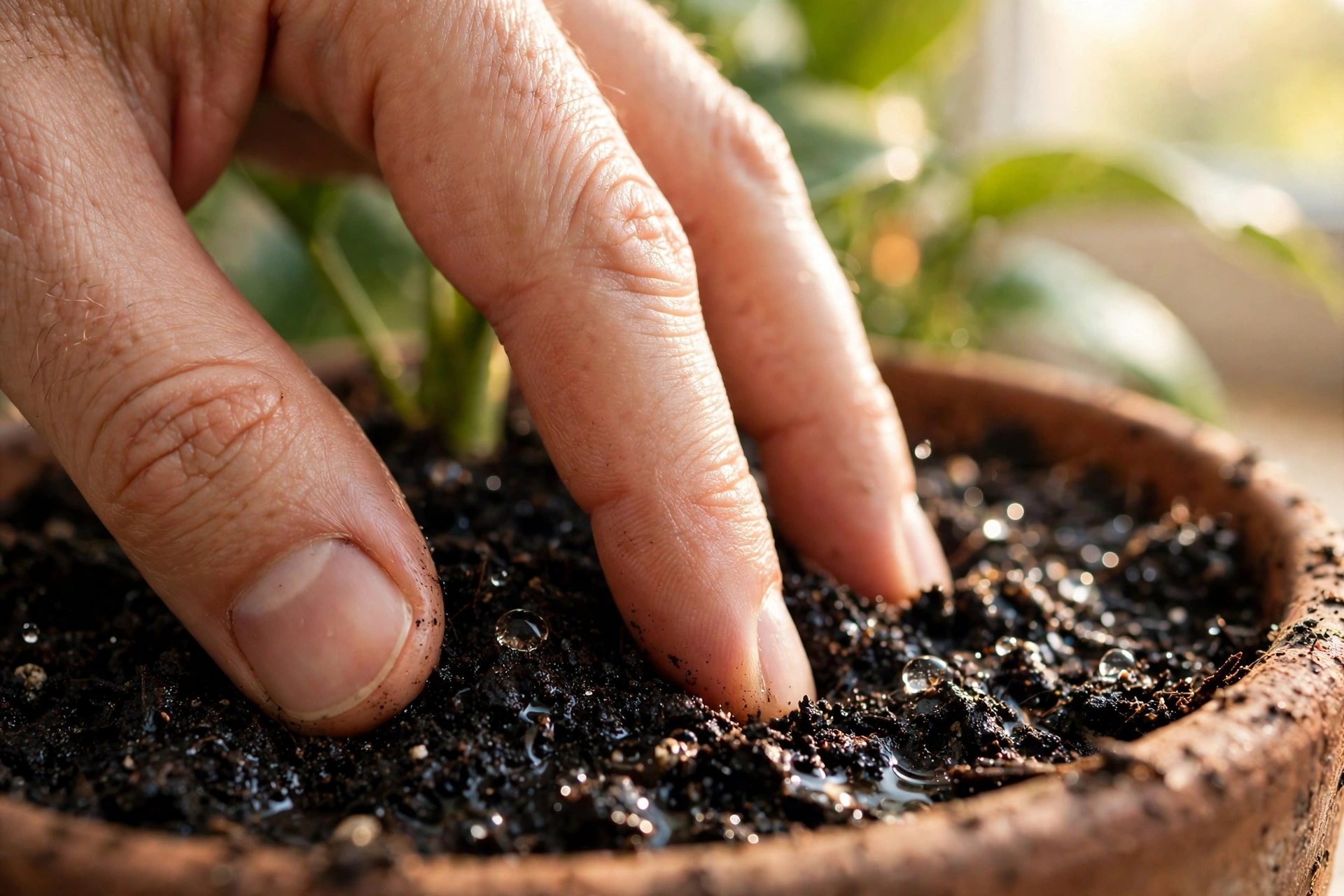
Every “water every X days” rule fails eventually, because your home is not a laboratory. A small pot in a sunny window dries in days. A big pot in a dim corner can stay damp for weeks. The same plant needs less water in December than in July. So forget the calendar and use your finger. Push it one to two inches into the soil near the plant’s base. Dry at that depth means water. Still damp means wait, even if a week has passed since the last drink. This one habit prevents more plant deaths than any gadget, and it is the backbone of our beginner houseplant care routine too. Two more checks help when you are unsure. Lift the pot: a dry pot feels noticeably lighter than a wet one, and after a few weeks you will feel the difference instantly. And look at the soil surface colour — wet soil is dark, dry soil turns pale — but never judge by the surface alone, because the top can dry while the roots are still wet.
HOW OFTEN BY PLANT TYPE
These are starting ranges, not rules — always confirm with the finger test: Succulents and cacti: every 10–14 days, only when the soil is fully dry. They store water in their leaves and rot fast in damp soil. Snake plant and ZZ plant: every 10–12 days, sometimes longer in winter. Both tolerate drought far better than wet feet. Tropical plants (pothos, philodendron, monstera): roughly every 5–7 days in the growing season, when the top inch or two dries out. Our pothos watering guide shows exactly how this looks for the most common beginner plant. Ferns and calatheas: every 2–4 days in summer, keeping the soil lightly moist but never soggy. These are the thirsty exceptions — they wilt fast if they dry out completely. If you own several types, do not water them all on the same day. Check each pot individually. Grouping plants by thirst — succulents together, tropicals together — makes the weekly round much faster.
WHAT CHANGES THE TIMING
Light. More light means faster growth and faster drying. A plant by a bright window drinks far more than the same plant in a dim corner. Pot size and material. Small pots dry fast. Terracotta breathes and dries quicker than plastic or glazed ceramic. A plant in a huge pot holds moisture for a long time — one reason beginners should not jump to oversized pots. Season. Growth slows in autumn and winter as days shorten, so soil stays wet longer. The most common winter mistake is keeping a summer schedule going. If your plant needed water every six days in July, it may only need it every two to three weeks in January. Soil and drainage. Dense, peaty soil stays wet; a chunky, well-draining mix dries faster. And a pot without a drainage hole breaks every rule here — water pools at the bottom no matter how careful you are. Your home’s air. Heating in winter and air conditioning in summer both dry the air and the soil surface, but they do not change what the roots need. Check the soil, not the weather app.
HOW TO WATER PROPERLY
When the finger test says dry, water like you mean it. Pour slowly and evenly over the soil until water runs freely from the drainage hole. Let it drain fully, then empty the saucer — a pot sitting in a puddle is effectively overwatered even if you watered rarely. Morning is the best time. The plant has the whole day to drink, and any splashes on leaves dry before night, which discourages fungus. Use room-temperature water; ice-cold water can shock roots, especially on tropical plants. For a plant whose soil has gone bone dry and shrunk away from the pot edges, top watering may run straight down the gap without wetting anything. In that case, bottom-water: set the pot in a tray of water for 20–30 minutes so the soil soaks up moisture from below, then drain it well.
OVERWATERING: THE SIGNS AND THE RESCUE
Overwatering is the number one killer of indoor plants, and it is sneaky — an overwatered plant often looks thirsty, with drooping yellow leaves, which tempts owners to water even more. Watch for: yellow leaves starting at the bottom, soft or mushy stems, soil that stays wet for days, a sour or musty smell, and mould or fungus gnats on the surface. If you catch it early, stop watering immediately and let the soil dry out completely — this can take one to three weeks depending on pot size. Move the plant to bright indirect light and better airflow to help it dry. If the plant is wilting in wet soil and the roots smell bad, it likely has root rot: take it out, trim away brown, mushy roots with clean scissors, and repot in fresh, dry mix. Learning to tell overwatered or underwatered apart by touch — soft, limp leaves in wet soil versus crispy leaves in dry soil — saves more plants than any other single skill.
UNDERWATERING: THE SIGNS AND THE RESCUE
Underwatering is more forgiving. Signs include dry, crispy leaf edges, curling or wilting leaves, soil pulling away from the pot, a very light pot, and slow or stunted growth. The good news: most underwatered plants bounce back within hours of a thorough drink, because their roots are usually still healthy. Rescue with a deep soak, or bottom-watering if the soil has gone hydrophobic. Trim off leaves that are fully brown and crispy — they will not recover — but leave any leaf that is still partly green, since it is still feeding the plant. Then go back to the finger test instead of overcompensating with daily watering, which swings the plant straight into the overwatering trap.
COMMON MISTAKES
Watering a little every day. Shallow, frequent watering keeps roots near the surface and the top of the soil constantly damp — the worst of both worlds. Soak, then dry. Watering at night. Wet leaves and soggy soil overnight invite fungus and gnats. Morning is better. Trusting a moisture meter blindly. Cheap meters can misread in chunky or very dry mixes. Use one as a second opinion, not a replacement for your finger. Ignoring the seasons. If you watered weekly all summer, check before watering weekly all winter. Growth slows, and so should you. Watering every plant on the same day. Different plants, pots, and spots dry at different speeds. Check each one.
FREQUENTLY ASKED QUESTIONS
How often should I water indoor plants in winter?
Less than in summer — often half as often. Growth slows as light drops, so soil stays wet longer. A plant watered weekly in July may need water only every two to three weeks in January. Always check the soil first rather than keeping a summer schedule.
Is it better to underwater or overwater?
Underwater, slightly. Underwatered plants usually recover within hours of a drink, while overwatering causes root rot, which is often fatal. When in doubt, wait a day and check again.
Should I water my plants from the top or bottom?
Top watering is fine for routine care — soak until it drains, then empty the saucer. Bottom watering is better for rescue cases where dry soil has shrunk from the pot edges, or for plants that hate wet leaves. Either way, never leave the pot sitting in water.
Why is my plant drooping even though the soil is wet?
Drooping in wet soil usually means root damage from overwatering, not thirst. The damaged roots cannot take up water even though water is present. Stop watering, let the soil dry fully, and check the roots for rot before watering again. If your leaves are also yellowing, our yellow leaves diagnosis guide helps you work through the causes in order.
Can I use tap water for houseplants?
Yes for most plants, as long as it is room temperature. A few sensitive plants, like calatheas, dislike chlorine and minerals in hard tap water and prefer filtered or rainwater. If your plant’s leaf tips keep browning despite good watering, try filtered water and see if it improves.